Hello, I'm
Garvish Bhutani
Engineering Science Robotics Student @ UofTPrev. Low Power AI Architecture Intern @ Qualcomm
About Me
I'm a 4th-year Engineering Science student at the University of Toronto, majoring in Robotics with a Minor in Machine Intelligence. I build systems that sit at the intersection of hardware and software, from autonomous navigation stacks for robots to AI hardware architecture on Snapdragon chips.
Previously interned at Qualcomm, I worked on low-power AI hardware integration, validation flows, and performance profiling for next-generation Snapdragon platforms. Outside of work, I lead drone and rover projects with the Robotics for Space Exploration (RSX) design team.
I'm passionate about robotics, embedded AI, and building things that move and think in the real world.
Education
University of Toronto
Engineering Science — Robotics Major, Machine Intelligence Minor
CGPA 3.61 · Dean's Honour List · Sep 2022 – May 2027
Awards
Robotics & Autonomy
Programming
AI / ML
Hardware
Tools & Infra
Experience
Low Power AI Hardware Architecture Intern
Qualcomm · Toronto, ON
- ▸Designed an automated end-to-end on-chip interconnect performance validation framework using object-oriented Python to wrap existing performance simulations, sweep hundreds of parameter combinations, and save engineering hours by catching defects before later design phases.
- ▸Derived and implemented an analytical memory latency and bandwidth baseline model using waveform and network interface analysis for bus protocols like AMBA AXI to catch discrepancies between observed results and theoretical expectations; plug-and-play for any chip or hardware using regex and just one JSON config file.
- ▸Used Pandas, Excel libraries, and JSON configs to develop a flexible graphing script for the validation tool to visualize and analyze results across configurations and flag potential issues.
- ▸Diagnosed and fixed a traffic generation flaw in performance simulations, generalizing the solution across 5+ SoC platforms with per-stream traffic differentiation; adopted as the team default in the shared codebase.
- ▸Contributed to the foundation of a large-scale effort to make simulation code reusable and fully Python-compatible by planning and implementing legacy code/framework cleanup and writing new logic allowing the same code to run across independent chips with very different hardware.
- ▸Rebuilt a regression smoke-test framework in Python with CI-style nightly automation, a web server UI, and artifact archiving, reducing manual validation overhead for the team.
- ▸Profiled embedded GUI rendering on a board with relevant cores for Always-on Display applications and Edge AI performance on a mobile prototype for workloads including audio, video calls, camera use, and sensor data processing.
- ▸Designed a visualization tool using breadth-first search in Python to display data and control paths between components as configured in chip simulations and relate them to the actual chip code.
Drone Lead — Heavy Duty Drone Survey Mission
Robotics for Space Exploration (RSX), UofT · Toronto, ON
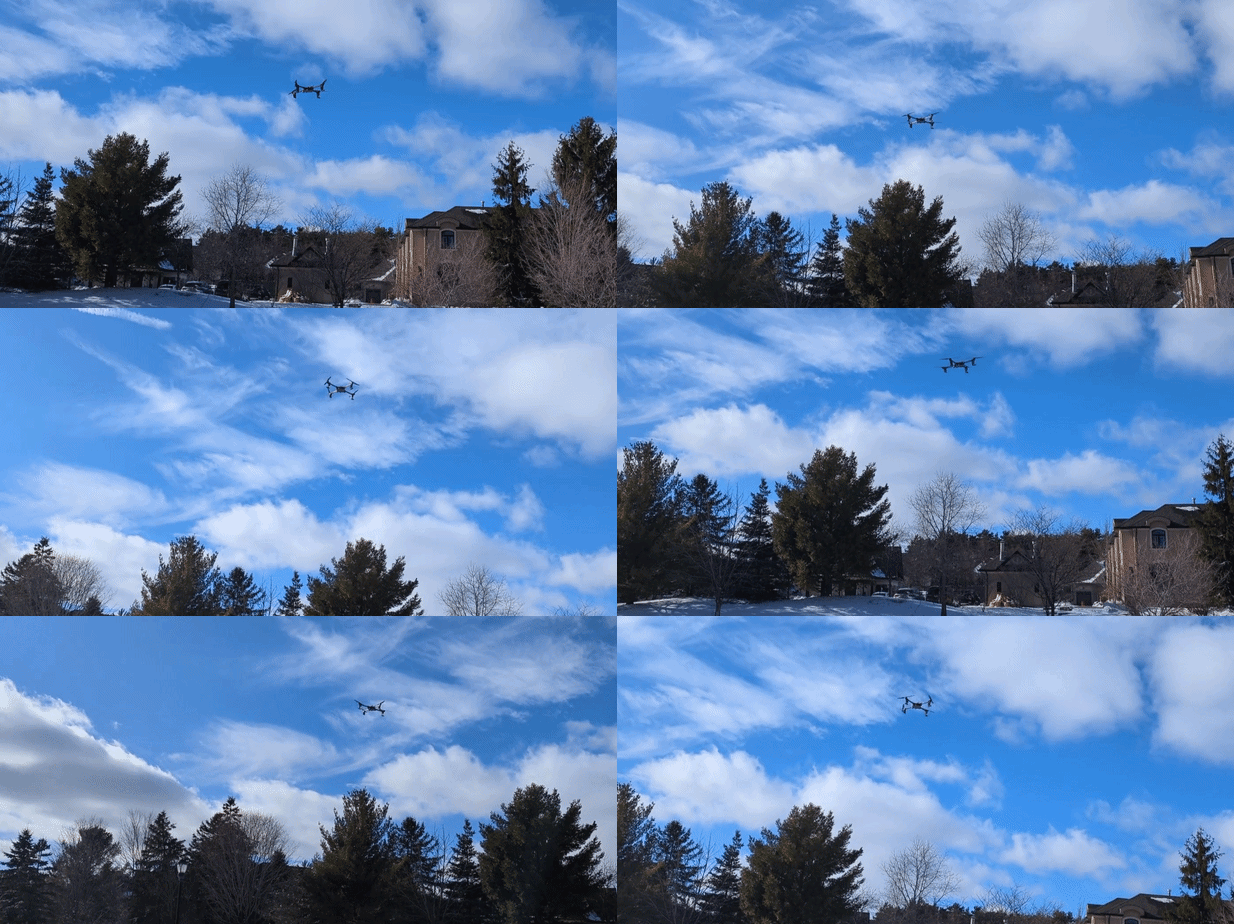
- ▸Developed a 17-inch quadcopter capable of carrying a 1.1 kg payload with up to 20 minutes of flight time in windy conditions.
- ▸Tuned PID controllers and validated ArduPilot-based position and altitude hold for stable, reliable flight performance.
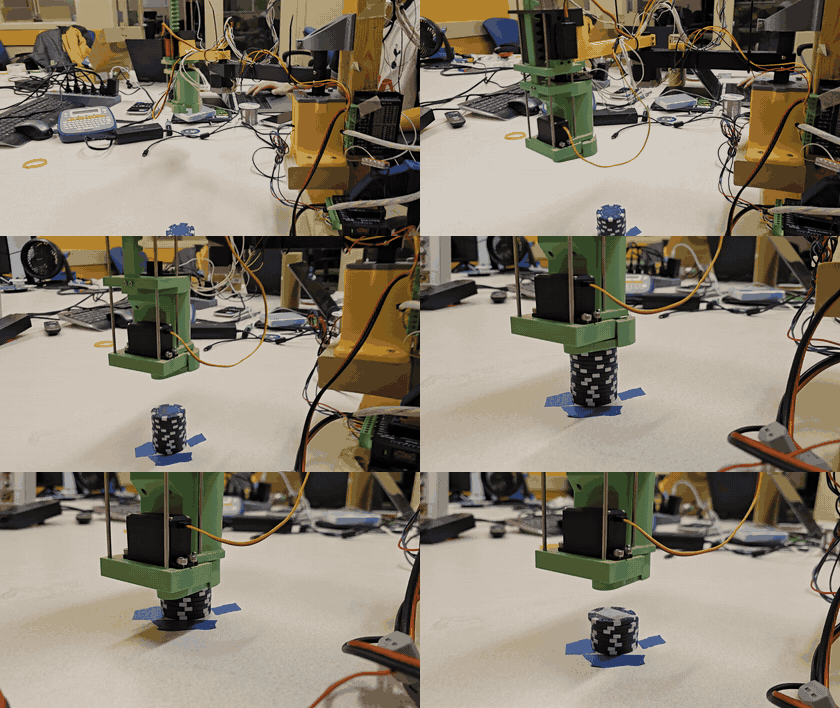
- ▸Led the design and implementation of a gripper system capable of picking up objects weighing up to 1 kg.
- ▸Managed full-system integration, assembly, and iterative design improvements to enhance reliability and maintainability.
Robotics Researcher — Sidewalk Navigation
Robot Vision and Learning (RVL) Lab, UofT · Toronto, ON
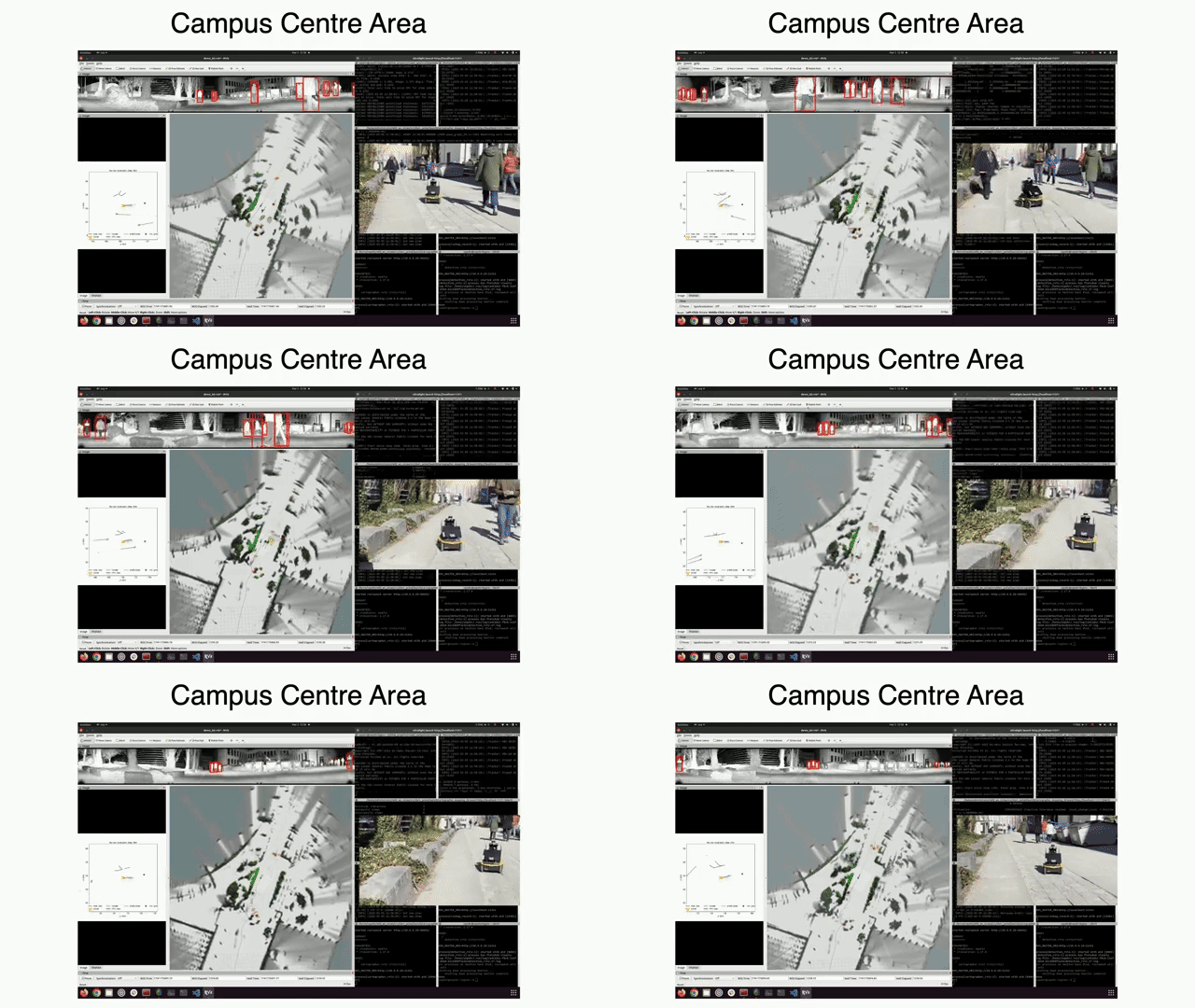
- ▸Integrated a Model Predictive Control local planner (SICNav) with Google Cartographer for localization, an A* global planner, and pedestrian detection (PiFeNet) and tracking system using a pillar aware attention on Clearpath Jackal robot equipped with Ouster LiDAR to create a fully autonomous navigation stack that safely interacts with pedestrians on sidewalks.
- ▸Developed a novel implementation of Cartographer using ROS Python and C++ with a 3D mapping model and 2D motion model getting the localization error down to 14cm allowing for safe maneuverability and obstacle avoidance on narrow sidewalks.
- ▸Improved and iterated over different implementations through rigorous testing indoors and outdoors to get every part of the navigation stack integrated and for our robot to navigate in the face of noisy localization and perception.
Software and Autonomy Lead — Mars Rover Navigation
Robotics for Space Exploration (RSX), UofT · Toronto, ON
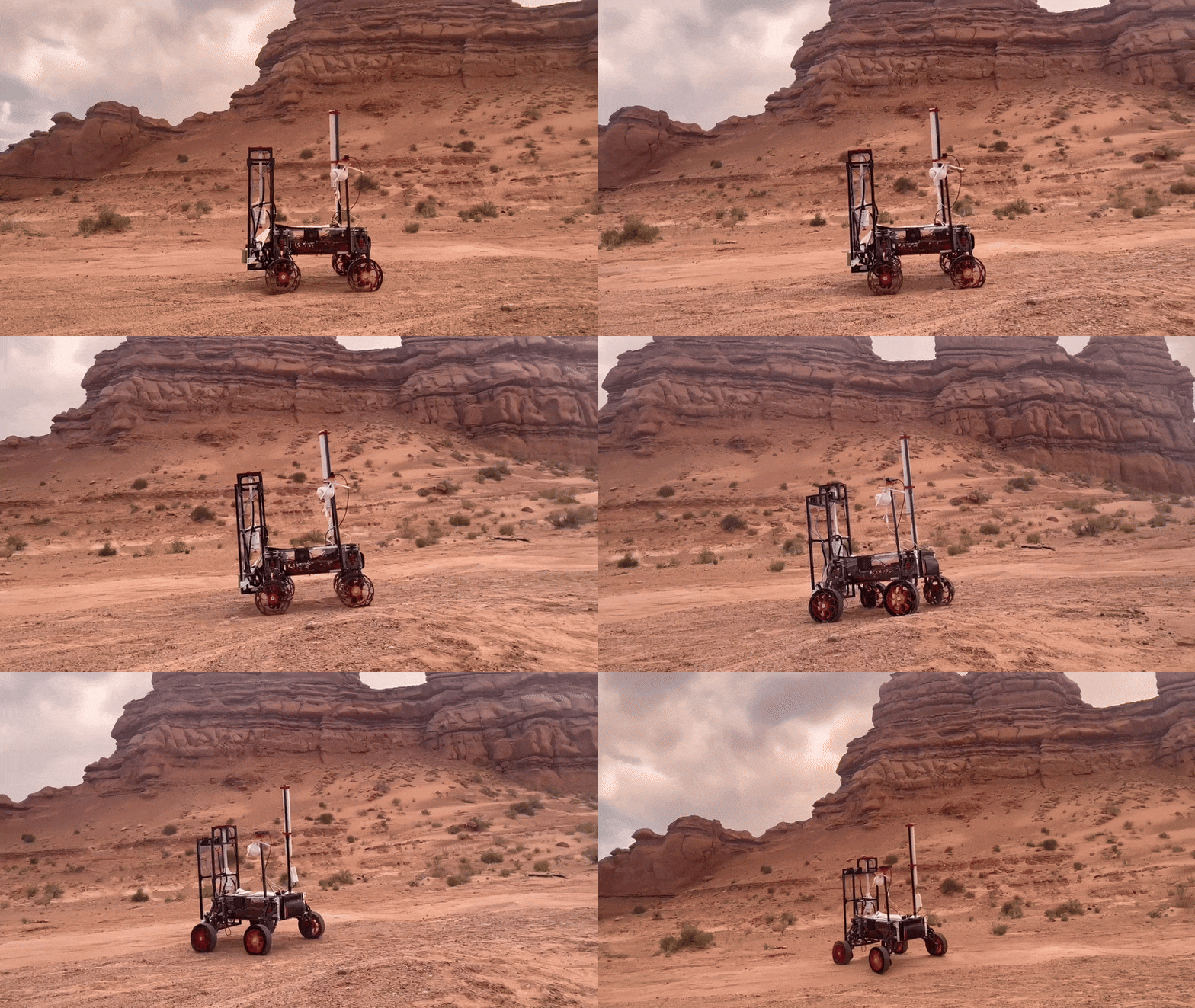
- ▸Developed an autonomous navigation system that achieved top 5 among 35 contestants in a University Rover Challenge mission to reach waypoints on an outdoor featureless Mars-like terrain using Python and C++ in ROS, with in-house obstacle avoidance algorithms and off-the-shelf ROS packages.
- ▸Coded the manual controls of the rover in C++ to be more intuitive while giving greater flexibility to the driver.
- ▸Developed and lead workshops teaching more than 100 students git concepts, dual booting Linux environment on windows and basic robotics concepts to give them experience with ROS, sensors, and navigation stack.
- ▸Implemented Easy Drive on the rover to allow for teleoperation with a bluetooth PS4 controller using system service calls and bash programming for automatic setup
- ▸Set up the communications system using a Wi-Fi protocol setup with Ubiquiti equipment enabling rover control at a range greater than 1 km.
Projects
A selection of research, engineering, and software projects spanning robotics, AI/ML, and hardware design.
Heavy Duty Survey Drone
Resume
A snapshot of my education, experience, and skills. Click below to view or download the full PDF.
3.61
CGPA
16 mo
Internship Experience
2+
Years Leadership
1
IEEE Publication
$12K+
Awards Won
Get in Touch
Open to internships, research collaborations, and full-time opportunities in robotics, AI hardware, and autonomy. Let's connect.
Direct Contact
Location
Toronto, ON
Response Time
I typically respond within 24–48 hours. For urgent matters, email directly.